Walking With Questions
On uncertainty, the currency of time, and the wild unlikelihood of any of this
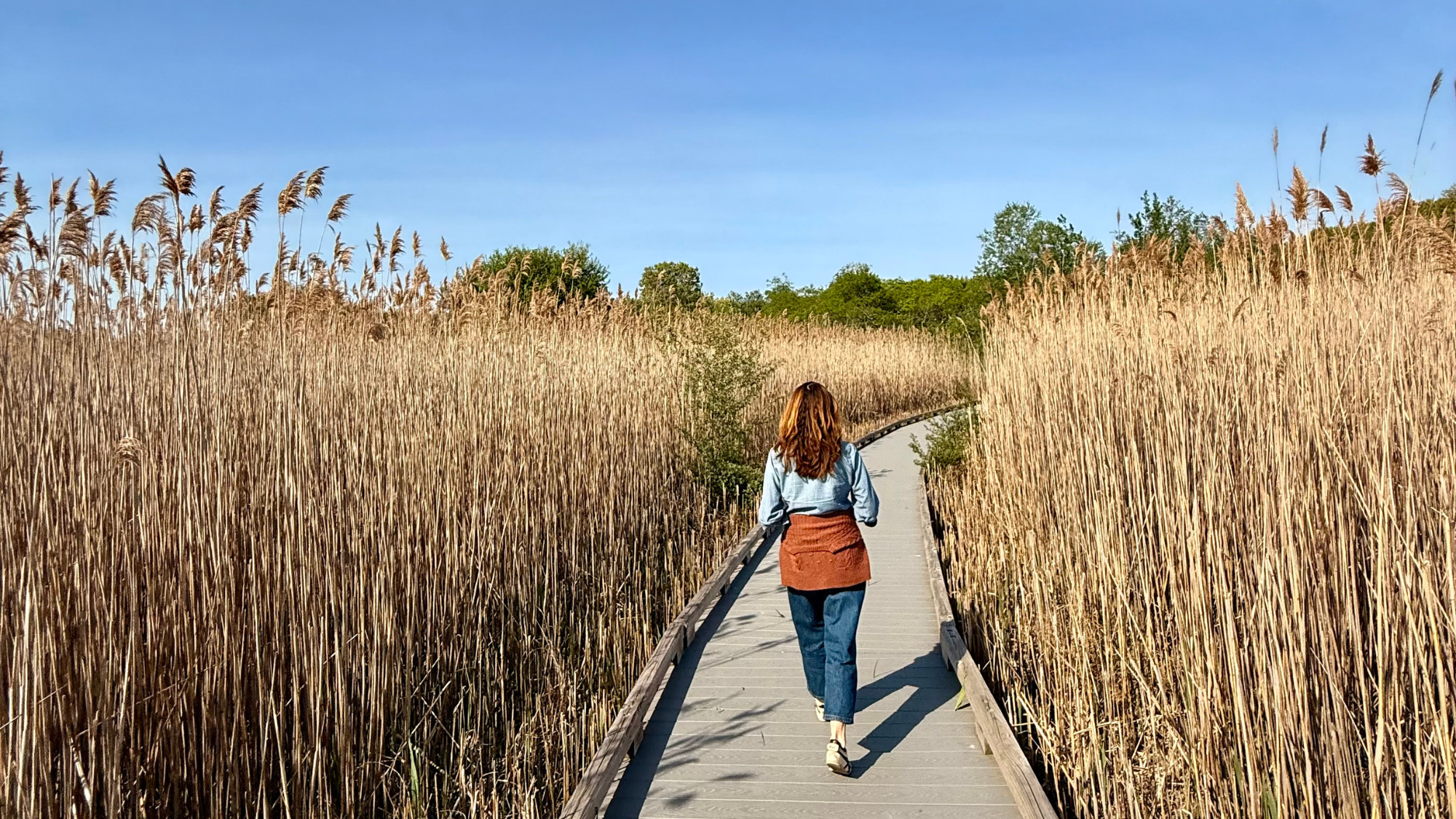
For weeks now, I have been leaving the house with the same question in my coat pocket. Walking farther than I usually walk. Mile four does not answer it; neither does five. Some mornings I am out an hour past sunrise, and the question is still walking with me when I come back a few hours later.
It is the kind of question that does not resolve by lunchtime or settle down once you have talked it through with someone wiser than you, although I have tried both of those things. I have to walk with it. I ask the walking to alchemize the question.
The question is about time. About how much of it I might have left, and what I want it to look like, and whether the way I am spending it now is the way I want to keep spending it.
I think I might have twenty more years. Maybe thirty if I am lucky. That is a number that used to feel enormous to me and now feels like something I can hold in my hand. Not in a sad way. Not in a frightening way. In a clarifying way.
I hold mortality close on many a walk. I think I always have. My dad died years and years ago, and his long illness meant mortality was part of every conversation in our house from the time I was small. You learn early. My mom died recently, and mortality is closer now than it has ever been. She walks with me out here. The heron, the wind off the salt marsh, whatever bird is doing the work of waking the world today, and her. Mortality is not the loudest voice in the conversation. It is the one asking the most useful questions.
Some mornings the question it asks is this. With however many of these mornings I have left, what do I want them to look like? What do I want to be doing? Who do I want to be doing it with? What am I still carrying that does not deserve to be carried? What do I want to leave behind? Not the grand legacy version. The small, ordinary version of a life that has actually been lived fully.
Something I keep returning to is the math of being here at all. It is almost impossible.
There is a calculation that has made the rounds for years, first introduced at a TEDx talk by Mel Robbins back in 2011 and then taken further by Dr. Ali Binazir, who walked it back through every ancestor of yours surviving long enough to reproduce, every chance meeting, every yes, and every yes again across thousands of generations. The number he arrived at for the odds of you existing as you, in this body, this lifetime, this morning, was roughly one in 400 trillion. Try to hold that number in your hand. It does not fit. There is no human-sized way to feel it. You can read his piece slowly, with a cup of tea, and even then you will not feel it. I don’t.
Four hundred trillion. And here you are. And here I am. Walking this river morning after morning, the same loop, the same bend where the great blue heron stands on one absurd leg every morning.
What I have come to believe, and walking is what got me here, is that uncertainty is not a problem to be solved. It is information. It is the body and the spirit telling you, you are not ready to know yet, keep moving, keep asking, keep your feet on the ground and your eyes on the light. The answer is not late. You are simply early.
The science backs this up in a few ways that I find quietly thrilling.
In 2012, a team of researchers led by Kenneth Vail published a review in Personality and Social Psychology Review called "When Death is Good for Life." They had gone through the existing literature on what happens to people when they hold their own mortality close, and what they found was not what their field had assumed. Far from being purely destructive, awareness of death tended to move people toward growth, toward deeper relationships, toward a reordering of what actually mattered to them. People got clearer. They got kinder. They got braver about what they wanted their lives to look like. The clarity I feel out here on the Merrimack in the dark, with the question of these next thirty years in my coat pocket, turns out to be a thing the researchers can describe.
A 2024 study in Death Studies by Kiana Cogdill-Richardson and Susan Bluck at the University of Florida found something similar. They asked adults to finish the sentence, Before I die, I want to... and the answers were almost never about money or possessions. They were about purpose. About connection. About meaning and becoming. Reflection on the end has a way of cleaning up the middle.
The other thing the research knows about walking, I have known in my body for over a decade. In 2014, Marily Oppezzo and Daniel Schwartz at Stanford ran four separate studies, published in the Journal of Experimental Psychology, and what they found was that walking, indoors or outdoors, on a treadmill or out in the world, increased creative thinking by an average of sixty percent. Eighty-one percent of participants did better on tests of divergent thinking while walking than while sitting still. And the effect kept going after they sat back down. The body, in motion, lends something to the mind. The mind, in motion, makes itself available for the question that has been waiting.
I notice it on every MorningWalk. The question I carry out the door is rarely the question I carry back in. Something rearranges. The river does it. The wind does it. The act of putting one foot in front of the other does it. By mile three, I am asking a better question. By mile four, I am sometimes asking the right one. And occasionally, somewhere between the last mile and the back door, an answer shows up. Not the whole answer. A piece of it. A direction. A no I had been hesitating to say or a yes I had not yet allowed myself to want.
The question I keep coming back to lately is this: Do I want to spend the most precious currency on earth, the time I have left, on X or on Y? It is rarely as dramatic as it sounds on paper. Sometimes X is staying in a creative project that has gotten quietly small. Sometimes Y is a decision that asks me to become someone I do not yet know how to be. Or the question is just which one of three reasonable, beautiful things I should say no to so that the fourth thing can have my whole heart.
I do not always know. I walk with the not-knowing.
What I have learned, and this is the only thing I am sure of, is that an answer that arrives at the desk before it has been walked is not the answer at all. It is a guess wearing a suit. The walked answer is different. It is quieter and truer. It feels like something the river and heron had already known and were just waiting for me to be ready to hear.
The Merrimack is the color of old pewter this morning. My boots are wet. The heron has not looked up.
The question is still unanswered.
But the morning is asking it with me, and I think that might be the whole point. I think this is what these years are for. Not to have everything figured out. To walk with what is not yet figured out and to trust the practice. To keep showing up at the river in the dark with whatever I am carrying and to let the walking do its slow, steady work.
So I walk.
Libby DeLana is an executive creative director with an explorer’s heart. She writes about walking, cold water, and the small rituals that make a life feel awake. Her books, Do Walk and Cold Joy, are companions for anyone who likes a little adventure in their days. You can find her on Instagram @thismorningwalk, @thiscoldjoy, and @parkhere. You can find Cold Joy at thiscoldjoy.com.